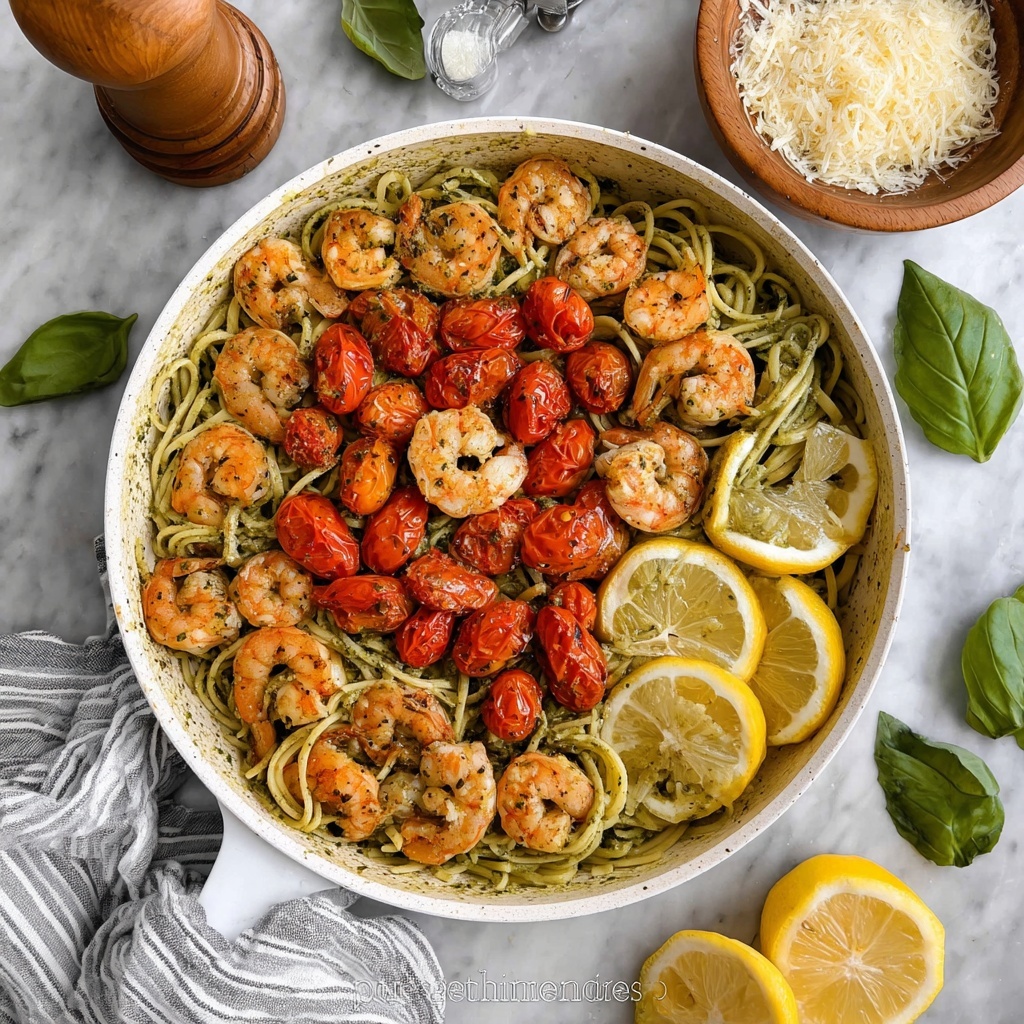
If you have a craving for something fresh, flavorful, and incredibly satisfying, this Shrimp Pesto Pasta Recipe is exactly what your kitchen needs. Imagine perfectly cooked spaghetti tangled with succulent, herb-seasoned shrimp, juicy blistered grape tomatoes, and a vibrant pesto sauce that brings every bite to life. The combination is not only a feast for your taste buds but also a gorgeous plate that looks as good as it tastes, making it a go-to for weeknights or impressing guests. Let me take you through this delightful recipe that balances simplicity and elegance in every step.
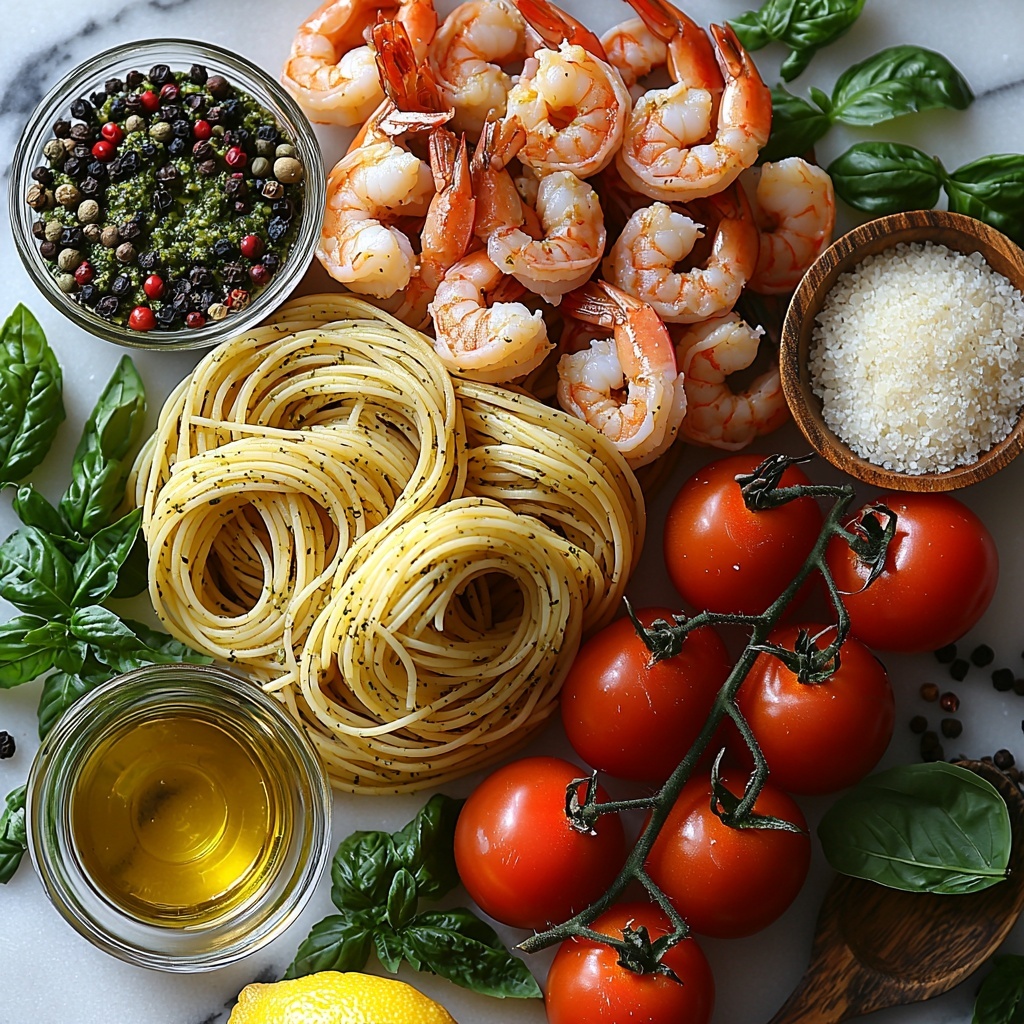
Ingredients You’ll Need
You don’t need a long list of complicated ingredients to make this dish shine. Each component plays a crucial role, creating a harmony of textures, colors, and flavors that transform simple pantry staples into a memorable meal.
- 12 ounces spaghetti: The classic long pasta that holds the pesto sauce beautifully while providing a satisfying bite.
- 1 pound medium shrimp: Peeled and deveined for ease, the shrimp add a tender, savory protein that pairs perfectly with bright pesto.
- ½ teaspoon dried oregano: A subtle herb to season the shrimp, enhancing their natural flavor without overpowering.
- ½ teaspoon salt: Essential for seasoning and balancing all the ingredients.
- ¼ teaspoon black pepper: Adds the right amount of spice and depth to the shrimp.
- 2 tablespoons olive oil: Divided for cooking shrimp and blistering tomatoes, bringing richness and a silky finish.
- 1 pint grape tomatoes: They burst with sweetness and acidity when cooked, brightening the whole dish.
- ¾ cup pesto: Homemade or store-bought, this vibrant green sauce is the star, infusing the pasta with fresh basil, garlic, nuts, and cheese.
- ¼ cup grated Parmesan cheese: Adds saltiness and a creamy texture that melts into the warm pasta.
- Fresh basil and lemon wedges (optional): For garnish and an extra fresh zing of flavor.
How to Make Shrimp Pesto Pasta Recipe
Step 1: Cook the Pasta
Start by bringing a large pot of salted water to a boil. Cooking the pasta al dente is key because you want it to have a slight firmness that holds the sauce well rather than becoming mushy. Don’t forget to save half a cup of the pasta water before draining—it’s surprisingly important for tying everything together later!
Step 2: Prepare and Season the Shrimp
While the pasta cooks, pat your shrimp dry using paper towels. This step helps them sear nicely instead of steaming. Then, sprinkle with dried oregano, salt, and black pepper to give them a lovely, balanced flavor base.
Step 3: Cook the Shrimp
Heat one tablespoon of olive oil in a large skillet over medium-high heat. Adding the shrimp in a single layer ensures they cook evenly, taking only one to two minutes per side until they’re an inviting bright pink. Once done, set them aside while you work on the rest.
Step 4: Blister the Grape Tomatoes
Lower the heat to medium and add the remaining olive oil and grape tomatoes to the skillet. These tomatoes will soften and start to burst, creating a slightly sweet and juicy sauce component that pairs spectacularly with the pesto and shrimp. Stir occasionally for about six to eight minutes to get them just right.
Step 5: Incorporate Pasta Water and Scrape the Pan
Take the skillet off the heat and pour in two tablespoons of the reserved pasta water. This watery addition loosens the pan’s flavorful bits, which is like capturing extra taste magic to infuse in your dish.
Step 6: Combine Pasta, Shrimp, and Pesto
Add the cooked pasta back into the skillet along with the shrimp and any accumulated juices. Then, dollop the pesto on top and toss everything together. This is the moment when all those beautiful flavors meld perfectly. If it feels a little dry, splash more pasta water until it reaches your ideal consistency.
Step 7: Adjust Seasoning
Give your pasta a careful taste and add more salt or pepper if needed. This step is crucial to balance the pesto’s richness with the shrimp’s savoriness and the tomatoes’ brightness.
Step 8: Finish with Parmesan and Fresh Herbs
Top your dish with grated Parmesan cheese for that irresistible melt and sprinkle with fresh basil leaves. If you like a touch of acidity, a squeeze of lemon juice brings a refreshing brightness that elevates the whole experience.
How to Serve Shrimp Pesto Pasta Recipe
Garnishes
Fresh basil leaves provide a fragrant, herbaceous touch that feels like a breath of fresh air amid rich pesto and shrimp. Adding lemon wedges gives your guests control over how much citrus brightness they want, making the dish customizable and even more enjoyable.
Side Dishes
This dish pairs wonderfully with a crisp, garden salad tossed in a light vinaigrette to cut through the richness. Garlic bread or a warm baguette is perfect for soaking up any leftover sauce, ensuring nothing good goes to waste!
Creative Ways to Present
Serve the shrimp pesto pasta in shallow bowls to showcase the vibrant colors, or present it plated with a twirling nest of spaghetti topped with a few whole shrimp and extra basil sprigs for a restaurant-style touch. Adding a drizzle of olive oil or a sprinkle of crushed red pepper flakes brings an inviting, final flourish.
Make Ahead and Storage
Storing Leftovers
Leftover shrimp pesto pasta stores beautifully in an airtight container in the fridge for up to two days. The flavors actually meld even more, but do keep the fresh basil separate if possible to avoid wilting.
Freezing
Because pesto and shrimp can lose some texture in the freezer, it’s best to freeze the cooked pasta and pesto sauce separately, and add fresh shrimp when reheating for best results. Pesto pasta can be frozen in portion-sized containers for up to one month.
Reheating
Reheat gently in a skillet over low heat, adding a splash of water or broth to keep it moist. Avoid the microwave if you want to maintain the shrimp’s tenderness and avoid overcooking.
FAQs
Can I use a different type of pasta for this Shrimp Pesto Pasta Recipe?
Absolutely! While spaghetti is classic, other long pastas like fettuccine or linguine work just as well, and even short pasta like penne can help hold the pesto sauce nicely.
Is it better to use homemade pesto or store-bought?
Both options are great depending on your schedule. Homemade pesto adds fresh brightness and you can customize ingredients, but a good-quality store-bought pesto saves time and still delivers excellent flavor.
Can I substitute shrimp with another protein?
Definitely. Chicken, scallops, or even firm tofu can replace shrimp if you prefer. Just adjust cooking times accordingly to ensure everything is properly cooked but tender.
How spicy is the Shrimp Pesto Pasta Recipe?
This recipe is mild by default, focusing on herbaceous and savory flavors. You can add crushed red pepper flakes if you want some heat without overwhelming the delicate shrimp and pesto balance.
Can I prepare this recipe ahead of time for a dinner party?
You can partially prepare it by cooking pasta and shrimp separately and mixing everything just before serving. Cooking tomatoes and warming the pesto last-minute keeps this recipe fresh and flavorful for guests.
Final Thoughts
Nothing beats the comfort and joy of a well-made Shrimp Pesto Pasta Recipe. It’s a vibrant, flavorful meal that’s quick enough for busy nights yet elegant enough to serve company. I can’t wait for you to try it and discover how just a few simple ingredients can come together to create something truly special. Happy cooking!
Print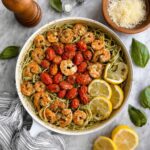
Shrimp Pesto Pasta Recipe
- Prep Time: 10 minutes
- Cook Time: 15 minutes
- Total Time: 25 minutes
- Yield: 4 servings
- Category: Main Course
- Method: Stovetop
- Cuisine: Italian
- Diet: Low Fat
Description
A vibrant and flavorful Shrimp Pesto Pasta combining perfectly cooked spaghetti with succulent sautéed shrimp, blistered grape tomatoes, and a rich homemade or store-bought pesto sauce, finished with grated Parmesan cheese and fresh basil for a quick and satisfying meal.
Ingredients
Pasta
- 12 ounces spaghetti (or other long pasta)
Shrimp
- 1 pound medium shrimp (peeled and deveined)
- ½ teaspoon dried oregano
- ½ teaspoon salt
- ¼ teaspoon black pepper
Other
- 2 tablespoons olive oil (divided)
- 1 pint grape tomatoes
- ¾ cup pesto (homemade or store-bought)
- ¼ cup grated Parmesan cheese
- Fresh basil (optional)
- Lemon wedges (optional)
Instructions
- Cook Pasta: Bring a large pot of salted water to a boil. Cook spaghetti according to package directions until al dente. Reserve ½ cup pasta water and drain the pasta; set aside.
- Season Shrimp: While the pasta is cooking, pat shrimp dry using paper towels. Season them evenly with dried oregano, salt, and black pepper.
- Sauté Shrimp: Heat 1 tablespoon olive oil in a large skillet over medium-high heat. Add shrimp in a single layer and cook for 1–2 minutes on each side until they turn bright pink and are just cooked through. Transfer shrimp to a plate and set aside.
- Cook Tomatoes: In the same skillet, reduce heat to medium and add the remaining 1 tablespoon of olive oil along with grape tomatoes. Cook, stirring occasionally, until tomatoes blister and burst, about 6-8 minutes.
- Deglaze Skillet: Remove skillet from heat and pour in 2 tablespoons of reserved pasta water. Scrape the bottom of the skillet to loosen any browned bits for added flavor.
- Combine Ingredients: Return skillet to heat and add cooked pasta, shrimp with any accumulated juices, and pesto. Toss thoroughly to coat everything evenly, adding more pasta water as needed to loosen the sauce.
- Adjust Seasoning: Taste the pasta mixture and add additional salt or pepper as desired to enhance the flavors.
- Serve: Plate the pasta and top with grated Parmesan cheese, fresh basil leaves, and a squeeze of lemon juice if desired for brightness.
Notes
- For a gluten-free option, substitute spaghetti with gluten-free pasta.
- Use homemade pesto for a fresher flavor or store-bought for convenience.
- Ensure shrimp are fully thawed and patted dry to achieve a better sear.
- The reserved pasta water helps to create a silky sauce that clings to the pasta.
- Adjust heat when cooking shrimp and tomatoes to avoid burning.