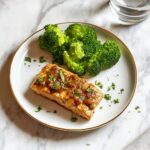
Description
This easy baked salmon recipe features tender, flaky salmon fillets glazed with a sweet and savory honey soy mixture. Perfect for a healthy weeknight dinner, the salmon is baked to perfection with a flavorful glaze that balances honey, soy sauce, garlic, and Dijon mustard for a deliciously simple yet impressive main course.
Ingredients
Scale
Salmon
- 4 salmon fillets, 6 ounces each, skin on
Glaze
- 1 ½ tablespoons low sodium soy sauce
- 1 tablespoon olive oil
- 1 tablespoon honey
- 1 ½ teaspoons Dijon mustard
- 2 cloves garlic, minced
Instructions
- Bring Salmon to Room Temperature: Remove the salmon fillets from the refrigerator and let them sit at room temperature for about 10 minutes. This step ensures more even cooking by preventing the salmon from being too cold going into the oven.
- Preheat Oven and Prepare Dish: Preheat your oven to 400°F (200°C). Line a 9×13-inch baking dish with parchment paper or aluminum foil to prevent sticking and to make cleanup easier.
- Make the Honey Soy Glaze: In a small bowl, whisk together the low sodium soy sauce, olive oil, honey, Dijon mustard, and minced garlic until the mixture is smooth and fully combined. This glaze adds a sweet and savory flavor to the salmon.
- Apply Initial Glaze: Place the salmon fillets skin-side down in the prepared baking dish. Reserve half of the glaze in a clean bowl. Use the remaining glaze to brush or spoon evenly over the top of the salmon fillets.
- Bake and Glaze: Bake the salmon for 12 minutes at 400°F. After this initial baking time, brush the fillets with the reserved glaze. Continue baking for an additional 2 to 8 minutes depending on the thickness of the fillets and your preferred level of doneness. The salmon is done when it flakes easily with a fork and ideally reaches an internal temperature of 145°F as recommended by the FDA (or 125-130°F with a 3-minute resting time for medium doneness).
Notes
- Letting salmon sit at room temperature before cooking helps it cook more evenly.
- Using low sodium soy sauce keeps the salt level in check without compromising flavor.
- Adjust the final baking time based on the thickness of your fillets and preference for doneness.
- For food safety, aim for an internal temperature of 145°F, but some prefer it slightly less done followed by resting.
- Line the baking dish with parchment or foil for an easy cleanup process.